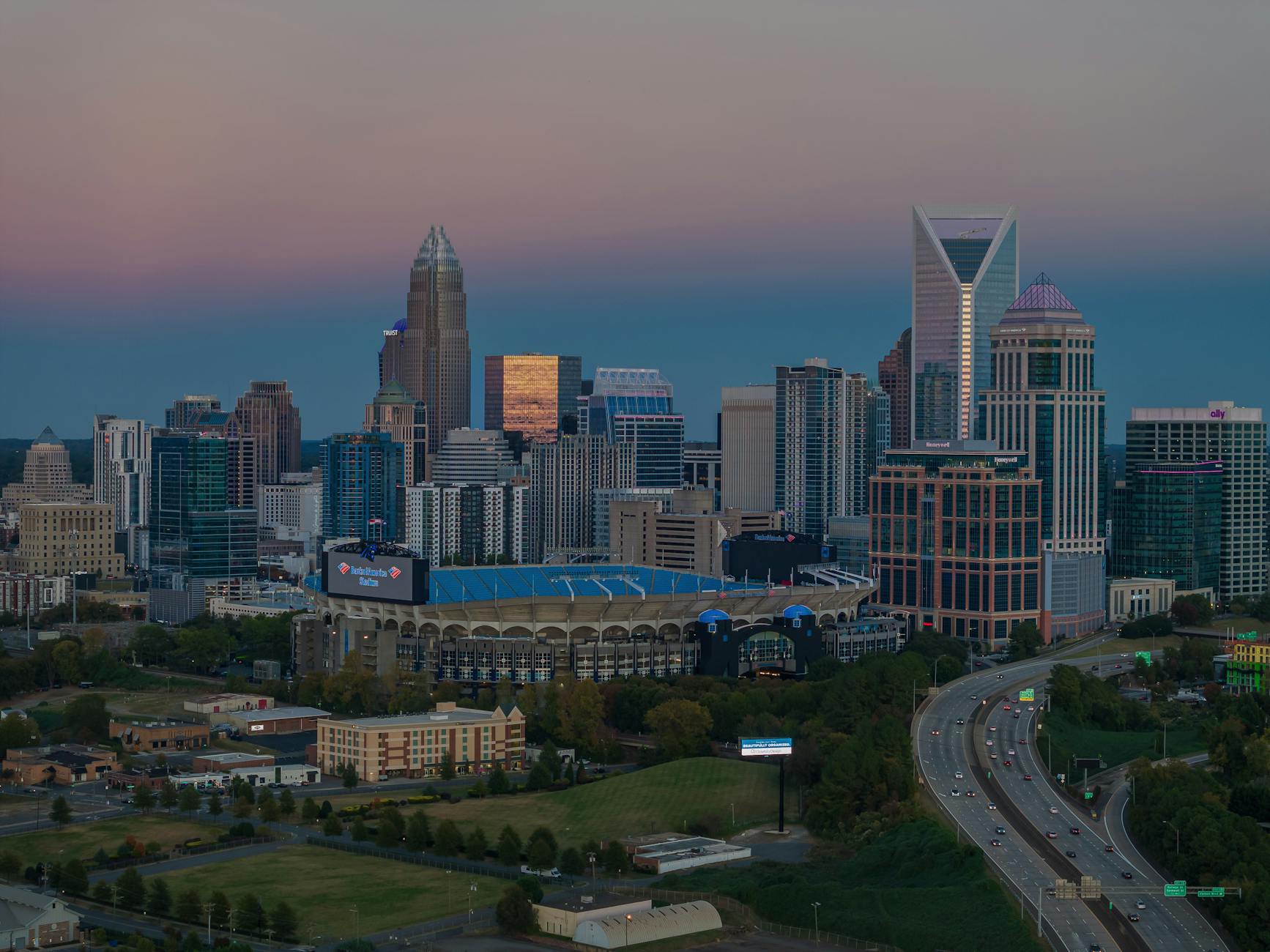
Listen, if you are reading this, you are not just daydreaming about moving to Charlotte on a rainy Sunday afternoon. You are looking at Zillow at 11 PM, calculating income tax differentials, and trying to decide whether packing up your home and moving to the Queen City is a brilliant career move or a naive overestimation of the Sunbelt hype. As someone who lives, breathes, and works in this city every single day, let me give it to you straight: Charlotte in 2026 is a completely different beast than it was even five years ago.
The secret is officially out. People aren't just moving here for lower taxes anymore; they are coming for high-paying corporate tech and banking jobs, world-class sports culture, a food scene that has outgrown its southern-comfort training wheels, and a quality of life that northern metros simply cannot replicate at this price point. But moving here blind is a rookie mistake. Charlotte is a city of distinct hyper-local pockets, unique tax structures, and intense hyper-growth pain points. Before you sign a lease or make an offer on a home, here is the unfiltered, ground-level reality of moving to Charlotte in 2026.
Why Charlotte in 2026 Specifically?
Charlotte has officially transitioned from a quiet regional banking hub into a national heavyweight. In 2026, the momentum here is undeniable. While major legacy markets like New York, San Francisco, and Chicago are dealing with corporate flight and high costs, Charlotte is capitalizing on massive capital inflows. The city isn't just growing outwards—it is densifying fast.
What makes 2026 unique is the payoff of decade-long infrastructure investments. The expansion of our transit corridors, urban greenways like the Cross Charlotte Trail, and major commercial developments are finally fully operational. You get the career ladder of a primary American city with the energy of a boomtown that is still defining its culture. If you arrive in 2026, you are catching Charlotte right at the sweet spot: mature enough to offer everything you want, but young enough that there is still room to build a real future here.
Cost of Living Reality Check
Let's talk money, because this is where most national relocation articles get it wrong. Yes, Charlotte is significantly more affordable than the Northeast or the West Coast, but it is no longer the bottom-dollar bargain town it was in 2012. You need real numbers to budget correctly.
Housing & Real Estate Breakdown
In 2026, the median home price in the Charlotte metro area hovers around $425,000 to $445,000. However, that figure is heavily skewed by suburban development. If you want to buy a single-family home in an established, walkable inner-ring neighborhood, you are looking at $750,000 to well over $1.5 million. If you are renting, a modern one-bedroom apartment in a prime neighborhood will cost you between $1,650 and $2,200 per month, while a two-bedroom unit ranges from $2,300 to $3,200 per month.
How Charlotte Compares to Major US Metros
- Charlotte vs. New York City: Overall cost of living is roughly 40% to 45% lower in Charlotte. Housing costs alone are up to 60% lower, and North Carolina’s flat state income tax rate gives high earners an immediate raise.
- Charlotte vs. Austin: Charlotte sits about 10% to 15% lower in overall housing costs compared to Austin. While Texas boasts no state income tax, North Carolina’s significantly lower property tax rates often equalize the total tax burden for homeowners.
- Charlotte vs. Atlanta: Charlotte and Atlanta offer comparable overall baseline costs, but Charlotte provides significantly shorter commute times, lower violent crime rates in urban cores, and a much more compact, navigable footprint.
Best Neighborhoods For You
Charlotte is not a central-city-dominated metropolis like Chicago; it is a collection of distinct urban villages. Picking the wrong neighborhood will ruin your experience. Here is the local breakdown of Charlotte’s top core neighborhoods in 2026.
South End
The Vibe: High-energy, hyper-walkable, dog-centric, and corporate-tech heavy. South End is ground zero for young professionals, packed with luxury mid-rises, craft breweries, boutique fitness studios, and the LYNX Blue Line light rail running right through the middle. If you want to walk to work and hit a rooftop bar by 5:30 PM, this is your spot.
NoDa (North Arts District)
The Vibe: Eclectic, historic, creative, and unapologetically quirky. NoDa is Charlotte's original arts district, defined by converted historic mill houses, live music venues, mural-covered alleys, and local coffee shops. It has gentrified over the years, but it retains a distinct grit and artistic soul that sets it apart from the glossier South End.
Plaza Midwood
The Vibe: Effortlessly cool, historic, and community-driven. Plaza Midwood blends old-school Charlotte character with edgy local flair. You will find vintage clothing stores and dive bars sitting alongside upscale cocktail lounges and modern custom builds. It appeals to a mix of established creatives, tech workers, and young families who want proximity to Uptown without the high-rise rat race.
Dilworth
The Vibe: Timeless elegance, grand oak canopies, and historic southern charm. Sitting right next to South End, Dilworth features beautiful historic bungalows, porch swings, and wide, tree-lined streets. It is home to Freedom Park—the city’s premier green space—and offers a quieter, high-end residential feel while being just minutes from urban nightlife.
Myers Park
The Vibe: Old money, grand architecture, and stunning streetscapes. Defined by Queens Road and its breathtaking, historic canopy of willow oaks, Myers Park is one of the most prestigious neighborhoods in the Southeast. Think stately brick colonials, country clubs, and elite private schools. It is quiet, pristine, and expensive.
SouthPark
The Vibe: Upscale suburban luxury with high-end commercial convenience. Centered around the famous SouthPark Mall, this area is a powerhouse of executive homes, corporate regional offices, luxury shopping, and fine dining. It is ideal for established professionals and families looking for elite public schools and manicured neighborhoods.
Uptown
The Vibe: Fast-paced, dense, and distinctly corporate. What other cities call "Downtown," Charlotte calls "Uptown." It is divided into four Wards, offering high-rise condo living, walkable access to financial HQs, major sports stadiums, and theater venues. It gets quieter on weekends, but for ultimate convenience to corporate desks, nothing beats it.
Ballantyne
The Vibe: Master-planned suburban perfection on the South Carolina border. Ballantyne is packed with top-rated public schools, corporate parks, manicured subdivisions, and sprawling golf courses. The massive "Ballantyne Reimagined" project has added walkable, urban-style retail centers, making it a self-contained haven for families and suburban executives.
The Job Market in 2026
You don't move to Charlotte without a plan, but luckily, the local job engine is one of the strongest in the country. Known historically as the second-largest banking center in the United States, Charlotte’s corporate base has diversified rapidly into a modern financial-tech and healthcare powerhouse.
- Banking & Financial Giants: Charlotte is the corporate headquarters for Bank of America and Truist Financial, as well as the massive East Coast operations hub for Wells Fargo. Financial operations, risk management, and executive leadership roles remain dominant drivers of local wealth.
- Fintech & Tech Expansion: The intersection of Charlotte’s banking muscle and software engineering has created a booming fintech sector. Major corporate players and scaling startups are aggressively hiring software developers, product managers, and cybersecurity specialists.
- Healthcare Infrastructure: Healthcare is the city's largest employment sector by head count. Atrium Health (headquartered here) and Novant Health are pouring billions into research facilities, regional hospitals, and medical schools, creating thousands of clinical and administrative roles.
- Corporate HQ Capital: Beyond banking, major brands like Honeywell, Lowe's (tech hub in South End), Nucor, Duke Energy, and Brighthouse Financial call the Charlotte area home, ensuring a resilient multi-sector corporate economy.
What Nobody Tells You
Every city has its quirks, quirks that glossy marketing brochures conveniently leave out. Here is the raw insider truth about living in Charlotte:
- The Traffic & Sprawl Factor: While Charlotte’s traffic isn't as brutal as Atlanta’s, poor highway planning means routes like I-77 and I-85 grind to a halt during peak hours. If you live in the suburbs and work Uptown, prepare to pay for express toll lanes or get comfortable with audiobooks.
- The Street Name Trap: Charlotte’s road naming conventions are legendary for confusing newcomers. You will find yourself driving at the intersection of Queens Road and Queens Road, or navigating Sharon Road, Sharon Amity, Sharon Lakes, and South Sharon Amity. Download a reliable GPS app immediately.
- Pollen Season is Real: Every spring, usually around April, the city is blanketed in a thick, visible layer of bright yellow pine pollen for about three weeks. Locals call it "The Pollenation." If you have allergies, stock up on antihistamines early.
- Car Dependence: Outside of the central light rail corridor (South End, Uptown, NoDa), Charlotte remains a driving city. You will need a car for errands, groceries, and exploring the wider metro area.
- The Tree Canopy Protection: Charlotte takes its tree canopy very seriously. The city has strict canopy preservation laws, giving established neighborhoods an incredible green, shaded park-like atmosphere that softens the southern heat.
Lifestyle: Work Hard, Play Outside
What keeps people in Charlotte after they move here is the balance of life. Charlotte works hard during the week, but the city turns off the laptop on Friday afternoon.
If you are a sports fan, you have professional games year-round right in your backyard. Catch NFL action with the Carolina Panthers or MLS matches with Charlotte FC at Bank of America Stadium (the Charlotte FC supporters' section is one of the loud, rowdy highlights of the city’s weekend energy). You can catch NBA action at the Spectrum Center with the Charlotte Hornets, or take in an outdoor summer baseball game with the Charlotte Knights in the heart of Uptown.
For outdoor enthusiasts, the US National Whitewater Center is a world-class playground located right on the Catawba River, offering white-water rafting, deep-water solo climbing, mountain biking trails, and live outdoor summer concert series. Want to escape the city? You are just 30 minutes from Lake Norman or Lake Wylie, 2.5 hours west to the Blue Ridge Mountains and Asheville, and 3.5 hours east to the beaches of the North Carolina coast.
The food and beverage scene has exploded beyond classic barbecue. While you can still get elite local smoked pork, Charlotte’s dining scene is defined by high-end chef-driven concepts in South End and Plaza Midwood, international food stalls at Optimist Hall, and over 75 craft breweries scattered across Mecklenburg County.
How To Prepare Before You Move
If you are serious about making Charlotte home in 2026, execution is everything. Do not try to figure it all out on the fly once the moving truck arrives.
- Step 1: Rent Before You Buy. Even if you have the cash to buy immediately, rent for 6 to 12 months in a central neighborhood. Charlotte’s micro-vibes vary block by block; test out a neighborhood’s daily rhythm, commute, and culture before locking into a long-term mortgage.
- Step 2: Map Your Commute with Real-Time Traffic. Check commute times on mapping apps during actual Charlotte rush hours (8:00 AM and 5:00 PM EST) from prospective neighborhoods to your workplace. A 10-mile drive can mean 15 minutes or 45 minutes depending on the corridor.
- Step 3: Align Your Priorities. Decide early whether walkable lifestyle urbanism (South End, NoDa, Plaza Midwood) or space, yard size, and top public school districts (Ballantyne, SouthPark, Lake Norman) matter more to your daily routine.
- Step 4: Get Connected to Local Intel. The Charlotte market moves fast. You need real-time, street-level insights on rising developments, neighborhood safety, new restaurant openings, and off-market real estate opportunities.
Ready to make your move to the Queen City seamless? Don't rely on generic advice. Visit NexLvlCharlotte.com right now to access deep-dive neighborhood guides, real estate breakdowns, local business spot-checks, and insider tips designed to help you transition to Charlotte like a local. Your next level starts here.