
North Carolina has been named the a top-two State for Business six years running. Not top ten. Top two, and #1 three times. And if you want to understand exactly where the heart of that story beats loudest — look no further than Charlotte. The Queen City isn't just riding North Carolina's momentum. It's generating it.

Two Years at the Top — What That Actually Means
CNBC's America's Top States for Business ranking doesn't hand out trophies lightly. It measures 86 data points across ten categories: workforce, infrastructure, cost of doing business, economy, technology and innovation, education, business friendliness, access to capital, cost of living, and quality of life. North Carolina didn't win on one category. It won across the board.
The consistency matters. One year at the top could be timing. Two consecutive years is a statement. It tells every CEO, every site selector, every startup founder, every relocating family that what's happening here is structural — not a spike, not a bubble, not good luck. It's the result of years of deliberate investment in the things that actually make a state worth betting on.
"North Carolina in CNBC's top two for business six years running isn't a ranking. It's a signal. And Charlotte is the loudest part of that signal."
Public-Private Partnerships: The Engine Behind the Growth
The most powerful driver of Charlotte's transformation over the past two decades hasn't been government alone, and it hasn't been the private sector alone. It's been the deliberate, disciplined collaboration between the two — public-private partnerships that turned big ideas into real infrastructure, real jobs, and real neighborhoods.
Here's the receipts:
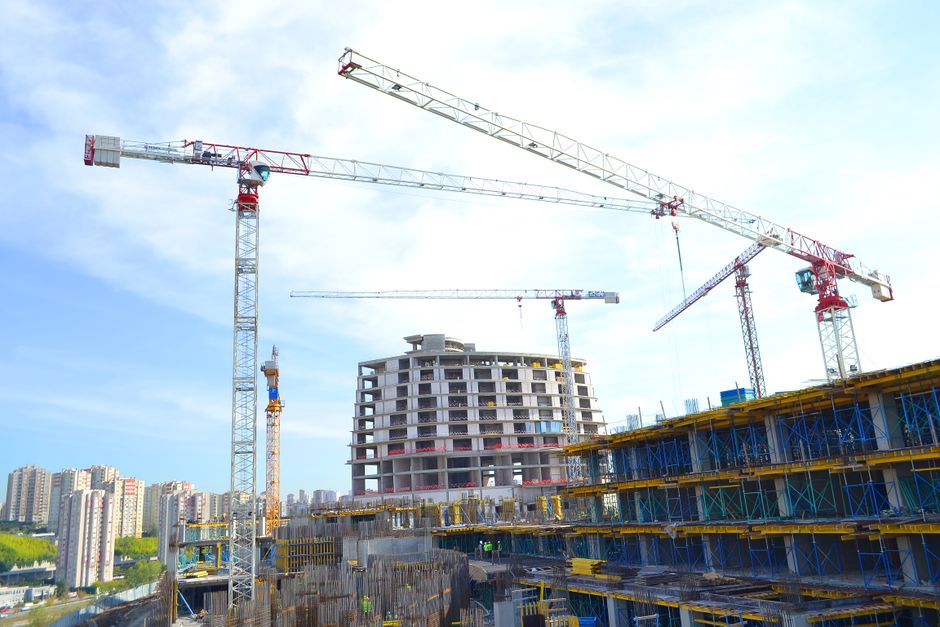
The LYNX Light Rail — Connecting the City
The LYNX Blue Line extension was a $1.16 billion investment — the largest transportation infrastructure project in Charlotte's history — made possible through a federal-city-private partnership. It didn't just move people. It transformed every neighborhood it touched. South End went from a light industrial corridor to one of the hottest urban neighborhoods in the Southeast in the decade after the rail line arrived. Real estate values, foot traffic, small business growth — all of it followed the tracks.
The CityLYNX Gold Line streetcar, another public-private effort, is weaving together neighborhoods that were previously disconnected — Camp North End, Cherry, and the core of Uptown — into a walkable, connected urban fabric.
Camp North End — Reinvention at Scale
The 76-acre former Ford assembly plant and Army Missile Plant sat dormant for decades. A public-private development partnership turned it into one of the most celebrated adaptive reuse projects in the country. Today Camp North End is home to tech companies, creative studios, restaurants, markets, and event spaces — a self-contained creative economy built on land that used to be idle. It's become a national model for what happens when a city and its private investors agree to think bigger than parking lots.
Charlotte Douglas International Airport
CLT is the 6th busiest airport in the United States. That's not a given for a mid-size Southern city — it's the product of decades of strategic investment between the City of Charlotte, American Airlines, and federal transportation partners. The airport handles over 50 million passengers annually, serves as a major hub for international business travel, and is the economic engine that makes Charlotte accessible to the global companies choosing to headquarter here. A $3+ billion expansion is currently underway — because the city and its partners are already planning for the next 20 years, not just the next two.
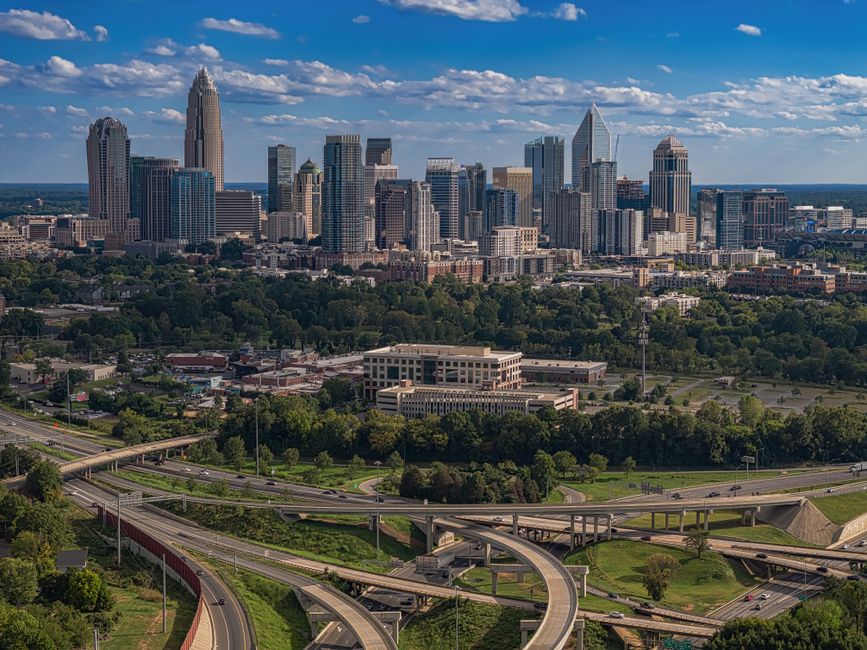
Bank of America Stadium & Major Event Infrastructure
Charlotte has invested heavily in becoming a major events destination. The renovation and expansion of Bank of America Stadium, the Spectrum Center upgrades, and the development of the convention center district are all public-private deals that created thousands of jobs and tens of millions in annual economic impact. Charlotte hosted games during the 2026 FIFA World Cup — a moment that put the city on a global stage and delivered an estimated $400+ million in economic activity in a single tournament run.
Innovation Districts & Tech Investment
The Charlotte Innovation District — anchored by UNC Charlotte's Center City building, Wells Fargo's innovation hub, and a growing cluster of fintech and health tech companies — is the result of coordinated investment between the university system, major corporations, and city economic development offices. The region has attracted billions in tech investment over the past five years, and the talent pipeline feeding it is being built locally through partnerships between Charlotte-Mecklenburg Schools, CPCC, and the UNC system.
Affordable Housing & Neighborhood Investment
Charlotte has committed over $100 million to its Housing Trust Fund, leveraging private developer partnerships to create workforce housing in a market that's growing fast. The goal isn't just to build — it's to ensure the city's growth remains accessible to the people who built it. Neighborhoods like West Boulevard, Beatties Ford Road, and the Historic West End are seeing coordinated public-private investment designed to create opportunity without displacement.

The Corporate Anchor Story
Charlotte is home to more Fortune 500 and Fortune 1000 headquarters per capita than almost any city in America. Bank of America. Wells Fargo. Truist. Lowe's. Duke Energy. Honeywell. Nucor. Brighthouse Financial. These aren't companies that stumbled into Charlotte. They chose it — and they keep choosing it — because the infrastructure, the talent, the quality of life, and the business environment make the math work.
When Honeywell moved its global headquarters to Charlotte from New Jersey, it was a signal heard nationally. When companies like Red Ventures, AvidXchange, and LendingTree built themselves into billion-dollar businesses here, they validated the thesis that Charlotte isn't just a place to put a regional office — it's a place to build something.
"Companies don't move their headquarters to a city they don't believe in. Charlotte has collected those votes of confidence for 20 years straight."
The Numbers Behind the Bullishness
- Top-2 State for Business — six straight years; #1 in 2022, 2023 & 2025 (CNBC)
- $1.16B LYNX Blue Line extension — largest infrastructure investment in city history
- $3B+ CLT airport expansion currently underway
- 50M+ passengers annually through Charlotte Douglas — 6th busiest in the US
- $400M+ economic impact from 2026 FIFA World Cup games
- $100M+ committed to the Housing Trust Fund
- 76 acres of former industrial land transformed at Camp North End
- Fortune 500 HQs — more per capita than nearly any comparable city
- 190+ new residents per day — and counting

Why NexLvl Charlotte Is Bullish
We document this city because we believe in it. Not as boosters. Not as cheerleaders. As people who live here, pay attention, and can see clearly what's being built — block by block, deal by deal, neighborhood by neighborhood.
The public-private partnership model that's driven Charlotte's growth isn't flashy. It doesn't make national headlines the way a tech unicorn does or a stadium announcement does. But it's the most durable kind of growth there is — built on infrastructure that outlasts any single company, any single administration, any single economic cycle.
Six straight years near the top of CNBC's business rankings is validation of a long game that Charlotte has been playing quietly and well. The city earned that ranking. The residents, the workers, the business owners, the city planners, and the private investors who bet on this place made it happen together.
We're bullish on Charlotte because Charlotte has earned it. And if the last two decades are any indication — the best is still ahead.